
The Sound Routes II presents
Sunday 17.11.2019 4pm | Café
Admission: pre sale 5 € plus fee / box office 10 €, 5 € (reduced), 3 € (Berlin Pass)
Organizer: Werkstatt der Kulturen
Production
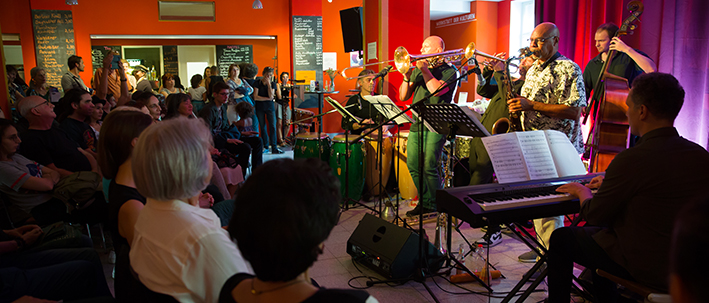
HOMAGE SESSION RELOADED
Jazz musicians worldwide absorb different influences and traditions and in so doing drive different kinds of developments. Particularly Berlin, a city characterised by migration, exile and high mobility, is a place where classical and traditional music genres from various regions of the world are defining and rejuvenating the Jazz scene of Berlin.
After the phenomenal success of HOMAGE SESSION in 2018, we are following up with HOMAGE SESSION RELOADED. At the launch of HOMAGE SESSION, the in-house World Jazz ensemble LITTLE BIG BAND was formed.
Homage Session reloaded follows a format whereby during the first set a World-Jazz album is presented as musical focal point. During subsequent jam sessions, other musicians from various origins continue reworking the album.
In this edition of HOMAGE SESSION RELOADED, the World-Jazz-ensemble of the WERKSTATT DER KULTUREN, Little Big Band, plays the album "Astrakan Café" by Anouar Brahem Trio.
Line-up:
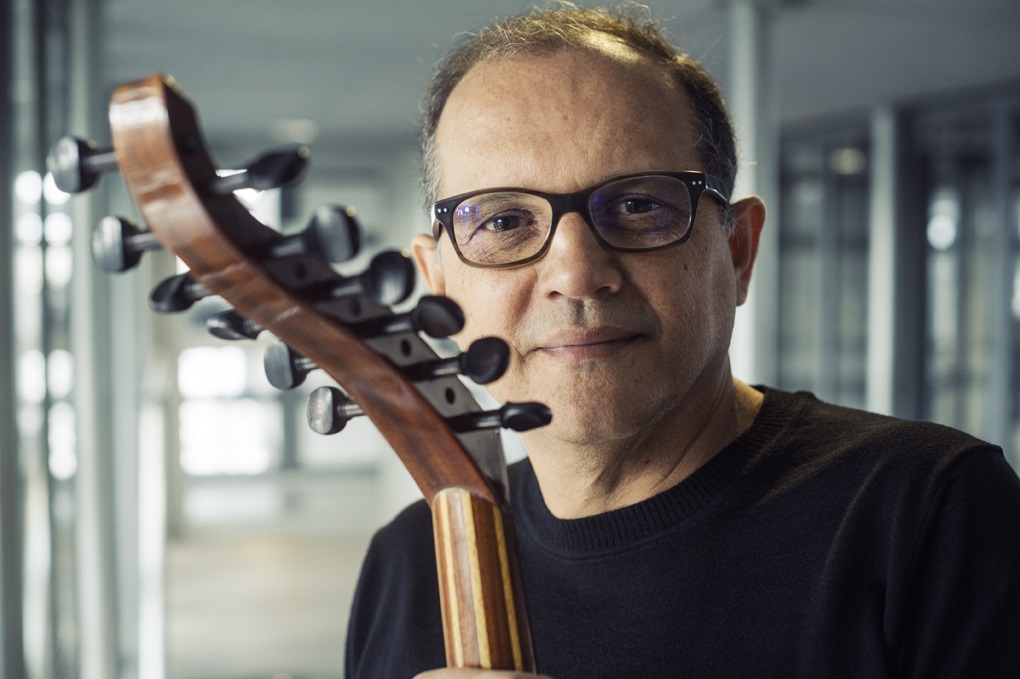
- Alaa Zouiten - oud
- Richard Müller - drums
- Amir Wahba - percussion
 
|
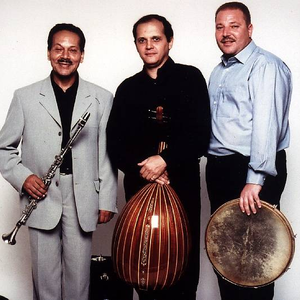
"Astrakan Café" - Anouar Brahem Trio
Astrakan Café is an album by Tunisian oud player Anouar Brahem recorded in 1999 and released on the ECM label.
Review by ALLMUSIC:
The Tunisian oud genius has done it again. Anouar Brahem has issued only five records under his own name over the past decade, each more adventurous than the last, without compromising his original vision which is: for the music of his region to meet with the other music of Africa and Asia and create a delirious sound with equal thirds - past, present, and future, along the precipice of historical lineage.
|
Brahem does not attempt to synthesise the globe, or even the sounds of the East with those of the West. He is content knowing that sound is infinite, and that his tradition, as it evolves and expands into a deeper pan-African/trans-Asian whole, is more than large enough for a master musician to rummage through in one lifetime. Astrakan Café, the follow-up to his brilliant Thimar, is a recording that reaches farther into the deep crags of the Balkans. With Barbaros Erköse playing the clarinet and the Indian and Turkish percussion stylings of the professor of somber precision, Lassad Hosni, Brahem's oud enters into a musical dialogue that has not existed previously (although he has collaborated with both players in the past). Erköse is a Turkish clarinetist of gypsy origin. His low, warm, rounded tones are consonant with the oud. Erköse plays equal parts music of the Balkan and Arab worlds with a tinge of the ancient klezmorim whispering their secrets through his horn. Despite the journeying these musicians do here, they never stray far from the takht, a small ensemble capable of improvising to the point of drunken ecstasy. Listening to Astrakan Café, you can enjoy gypsy flamenco tied deeply with Indian ragas and even Eastern jazz. But it does not sound hyperactive in any way, the band does not need to cram as many traditions as possible into one mix only to express nothing but to be novel. Astrakan Café has many highlights: its two title tracks have their roots in music from Russia and Azerbaijan; "Ashkabad," which is an improvisation on melodies from the folk music of Turkmenistan; "Astara," a modal improvisation based on love songs from Azerbaijan; "Halfounie," is a Brahem-composed soundtrack inspired by the medina or marketplace in Tunis; and "Parfum de Gitanie," which takes a fragment from Ethiopian sacred music, slows it to the point of stillness, and waxes lazily and jazzily over the top, with the oud and the clarinet trading syncopated eights. This is deeply personal, profound music. It is also highly iconographic, with timelessness woven through every measure. The only "exotica" on Astrakan Café is its "otherness" out of space and any discernable era. The tempos are languid and full of purpose, the dynamics clean and clearly demarcated, the tones and modes warm, rich, and linear. This would be traditional music if a tradition such as this - which is original, though adapted from many sources on inspiration - actually existed. |
LITTLE BIG BAND
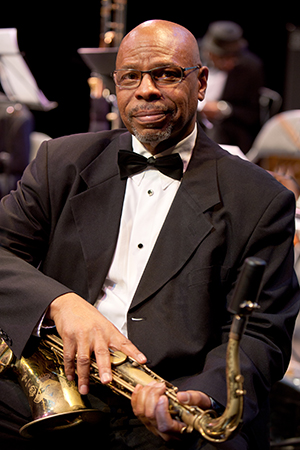 |
Whether at a concert hall or opera house, theatre or ballet - a permanent artistic ensemble is standard for most cultural institutions. The in-house World Jazz ensemble of the WERKSTATT DER KULTUREN, 'LITTLE BIG BAND', is a dynamic ensemble of jazz and world musicians whose members change according to whose world jazz compositions are being performed. Within the framework of HOMAGE SESSION RELOADED, the fixed core of musicians are aided by colleagues from the THE SOUND ROUTES project - depending on what type of work of a respective world jazz composer is played and interpreted. Saxophonist Fuasi Abdul-Khaliq is the band leader of the LITTLE BIG BAND and curator of the concert series HOMAGE SESSION RELOADED. |
| |


|
|
|
