
As with almost all metropoles in the world, Berlin is increasingly characterised by religious diversity: more than 250 religious communities as well as numerous non-religious but ideologically connected groups can be found in the city. It is by no means only about Abrahamic religions in Berlin: you can find the only Candomblé temple of Germany, several Hindu temples by communities from Sri Lanka and South India, a Sikh shrine, as well as temples of numerous Buddhist communities from South, South-east and Inner Asia. Syrian and Iraqi Yezidis practice their religion in the city, as do Baha'i from Iran or followers of traditional African religions.
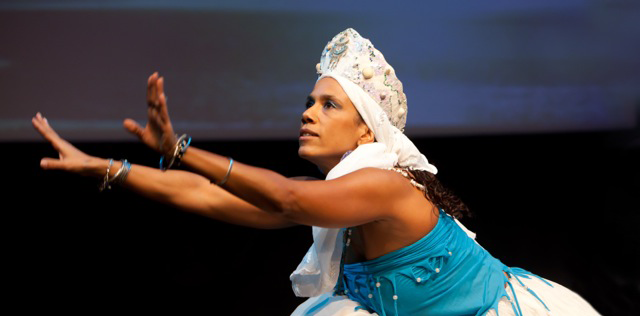
- On a more sensual level, the cross-over festival "Faith in Tunes" (2016 & 2017) and the "Sacred Music & Dance Festival" (2013) made this religious and ideological richness of Berlin tangible in the WERKSTATT DER KULTUREN. Both festivals are tributes to the city of Berlin, new and old home to a multitude of different religious communities, which as an integral and indispensable part of religious activity cultivate a very lively practice of religious and religiously-inspired music and dances.
- In October 2017 the "1st Festival of Religious and Spiritual Cultures" was held with screening of films and lectures. According to its leitmotif "we celebrate cultural difference" the WERKSTATT DER KULTUREN showed religious and spiritual films from all over the world - with special emphasis on works portraying smaller, less visible religious communities.
- Since 1999, the voluntary working group Werkstatt Religionen und Weltanschauungen (transl. Workshop on Religions and Worldviews) has been investigating specific social issues in the context of religious and other worldviews within its long-term project. At its monthly meetings, the working group together, with its participants, opens up new realms of knowledge and the perception of one's own socialisation. Each year the group investigates a new topic from different religious perspectives (e.g. growing up, gender roles, identity, work, dignity, fanaticism, property, change, etc.). It presents its findings at an annual training conference for teachers, which is regularly attended by approx. 100-140 multipliers. In addition, the Werkstatt Religionen und Weltanschauungen regularly publishes materials for school lessons. Contributors to the Werkstatt Religionen und Weltanschauungen are among the initiators of the Berlin Forum of Religions, and the founders of the Bern House of Religions have also learned a great deal conceptually from the Workshop Religions and Worldviews.
|
|
|
