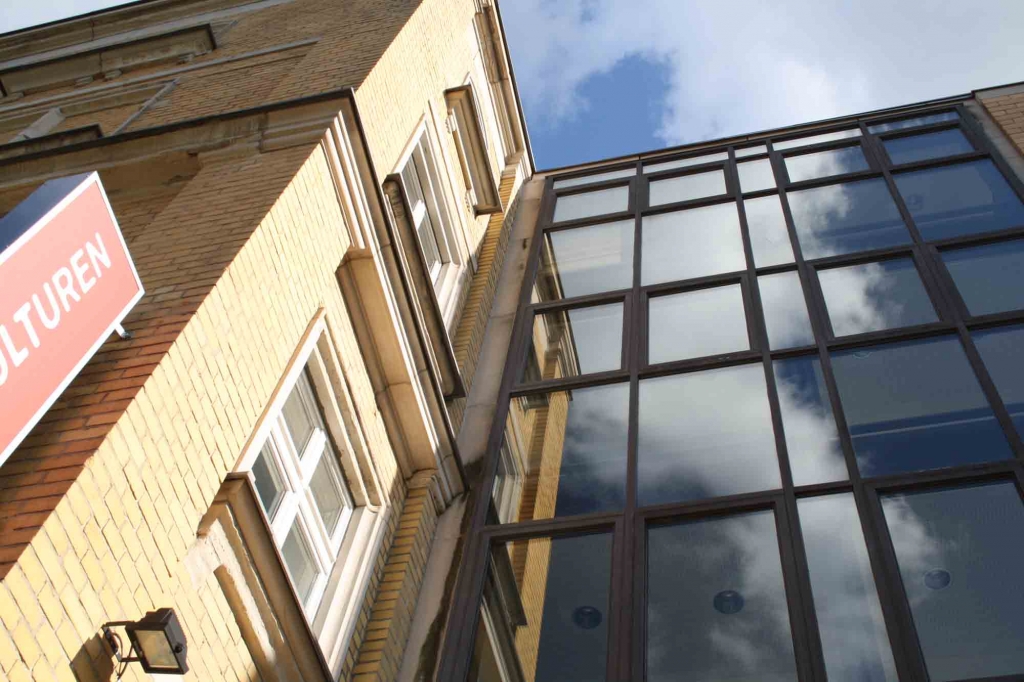

In a post-colonial world it is imperative to share and deal with the stories of all the citizens of Berlin, to be interested in the interconnections of their biographies and to overcome national-historical perspectives. And if an institution also has the name of a colonialist like Hermann Wissmann in its letterhead, it cannot avoid dealing with German colonial history and its consequences.
In 2003, shortly before the 100th anniversary of the beginning of the Maji-Maji War, the bloodiest German colonial war with 300,000 victims, the WERKSTATT DER KULTUREN began with a project on the subject that continues to this day.
The Maji-Maji working group was responsible for a large part of the activities aimed at decolonising the Berlin cityscape, while at the same time a large number of projects were carried out at the WERKSTATT DER KULTUREN to deal with German colonial history, such as the series of events 100 Years of Maji Maji War.
Further productions and events are:
- "1884" - Colonial history in sheet music. In 2010 musicians of African origin took part in a history conference at the WERKSTATT DER KULTUREN, which dealt with the consequences of the so-called "Africa Conference" of 1884/1885 and colonialism. Under the direction of the musician and producer Jonas Bibi Hammond and the great griot singer and percussionist Abdourahmane Gilbert Diop, who since passed away, an album was developed that critically examines the historical events and their effects to the present day;
- the panel "Postcolonial Justice", consisting of Prof. Paul Gilroy (King's College, London University), Prof. Nikita Dhawan, Rajeev Balasubramanyam and other prominent figures;
- the series of seminars "Religion as Counterculture. African Prophets, Spirit Mediums and Muslim Saints under Colonial Rule" by Prof. Cheikh Anta Babou (University of Pennsylvania);
- the workshop and performance series of the RAA Berlin „Dekolonisiert euch!“ (transl. "Decolonise yourselves!”;
- the conference "No Amnesty on Genocide" of the Bündnis “Völkermord verjährt nicht!” (transl. Alliance “ Genocide does not expire!”)
- In addition, the launch of the audio guide "Kolonialismus im Kasten" (transl. “Colonialism in the Can") took place in the WERKSTATT DER KULTUREN complementing the permanent exhibition of the ‘Deutsches Historisches Museum’ with relevant information;
This range of topics was visually explored in two exhibitions, among others:
- "200 years later...", a tribute to those women and men of African origin who had the courage and strength to resist the European trade in human beings.
- and "Manufacturing Race. Contemporary Memories of a Building's Colonial Past", an exhibition about the history and memories of the colonial past of a building at Ihnestraße 22, today a building of the Otto Suhr Institute for Political Science at Freie Universität Berlin - in cooperation with Freie Universität Berlin under the direction of political scientist Bilgin Ayata.
|
|
|
